

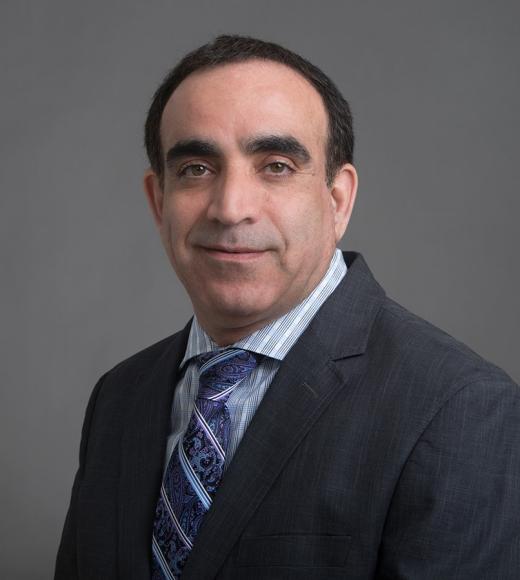
Position Title
Professor and Director of Microbiome Research
- Dermatology
As a cellular microbiologist, Shafikhani's research strategy involves leveraging insights from pathogen studies to enhance the understanding of host cellular processes. His lab primarily focuses on identifying the virulence mechanisms that drive Pseudomonas aeruginosa pathogenesis in wound infections, as well as investigating the eukaryotic host responses aimed at controlling these infections.
Additionally, Shafikhani's team uses bacterial toxins as molecular tools to explore critical mammalian cellular processes, including cytokinesis, apoptotic programmed cell death, and apoptotic compensatory proliferation signaling.
Recent projects in the lab are centered on identifying the dysfunctional mechanisms that make diabetic wounds susceptible to infection and impair their healing processes.
Research interests in Shafikhani lab are multidisciplinary in nature. Our research is supported by grants from the National Institutes of Health (NIH), philanthropic funds, and institutional awards.
Current Research Projects
- Molecular mechanisms of impaired infection control and healing in diabetic wounds.
Diabetic foot ulcers are the leading cause of lower-extremity amputations in the U.S. and result in more hospitalizations than any other complication of diabetes. These outcomes highlight the limitations of current therapies and the need for new approaches. Our NIH R01–funded work investigates why diabetic wounds fail to control infection and heal properly, focusing on susceptibility to pathogens such as Pseudomonas aeruginosa. We have shown that delayed neutrophil responses caused by impaired FPR-mediated chemotaxis increase infection susceptibility. We also demonstrated that early suppression of Toll-like receptor signaling, driven by elevated IL-10, reduces pro-inflammatory cytokine production, delays macrophage responses, and impairs healing. Topical blockade of IL-10 or IL-10R restores TLR signaling, enhances inflammatory responses, and significantly improves healing. - Developing antibiotic-free strategies to control surgical site infections (SSIs).
SSIs remain a major cause of morbidity and healthcare costs in the U.S., with an estimated annual burden of $3.5–$10 billion. While perioperative antibiotics are standard care, their use contributes to antimicrobial resistance, C. difficile infection, and microbiome disruption. Supported by an NIH R01, our lab is developing immunomodulator-based therapies as alternatives or adjuncts to prophylactic antibiotics. Our recent studies demonstrate that these approaches are as effective as, or superior to, systemic antibiotics in controlling P. aeruginosa and MRSA infections in wounds and periprosthetic implants. These discoveries have also led to several approved and pending patents. - Virulence strategies used by Pseudomonas aeruginosa to evade innate immunity.
Supported by NIH grants, we study mechanisms by which P. aeruginosa evades host innate immune defenses. Our recent work showed that host recognition of the bacterial Type III secretion system activates a CrkII/Abl → PKC-δ → NLRC4 signaling cascade, leading to caspase-1 inflammasome activation and bacterial clearance. These studies identified the CrkII adaptor protein and Abl tyrosine kinase as essential regulators of the NLRC4 inflammasome. - Apoptotic Compensatory Proliferation Signaling (ACPS) in wound healing, cancer, and host defense.
Apoptosis can trigger compensatory proliferation in neighboring cells, although the mechanisms have been unclear. While studying P. aeruginosa–induced apoptosis, we discovered that apoptotic epithelial cells release specialized microvesicles that stimulate proliferation in surrounding cells. We termed these vesicles Apoptotic Compensatory Proliferation Signaling Vesicles (ACPSVs). Imaging and biochemical analyses showed that ACPSVs are distinct from exosomes and apoptotic bodies. We have since demonstrated that these vesicles are produced by cancer cells and in solid tumors. Interestingly, P. aeruginosa Exotoxin T blocks ACPSV production while inducing apoptosis, suggesting that uncoupling apoptosis from compensatory proliferation may enhance bacterial survival during infection.
- University of California, Berkeley in Berkeley, California, Ph.D., Microbiology, 2001
- University of California, Berkeley in Berkeley, California, B.A., Molecular Cell Biology, 1991
- https://www.ncbi.nlm.nih.gov/myncbi/sasha.shafikhani.1/bibliography/public/